


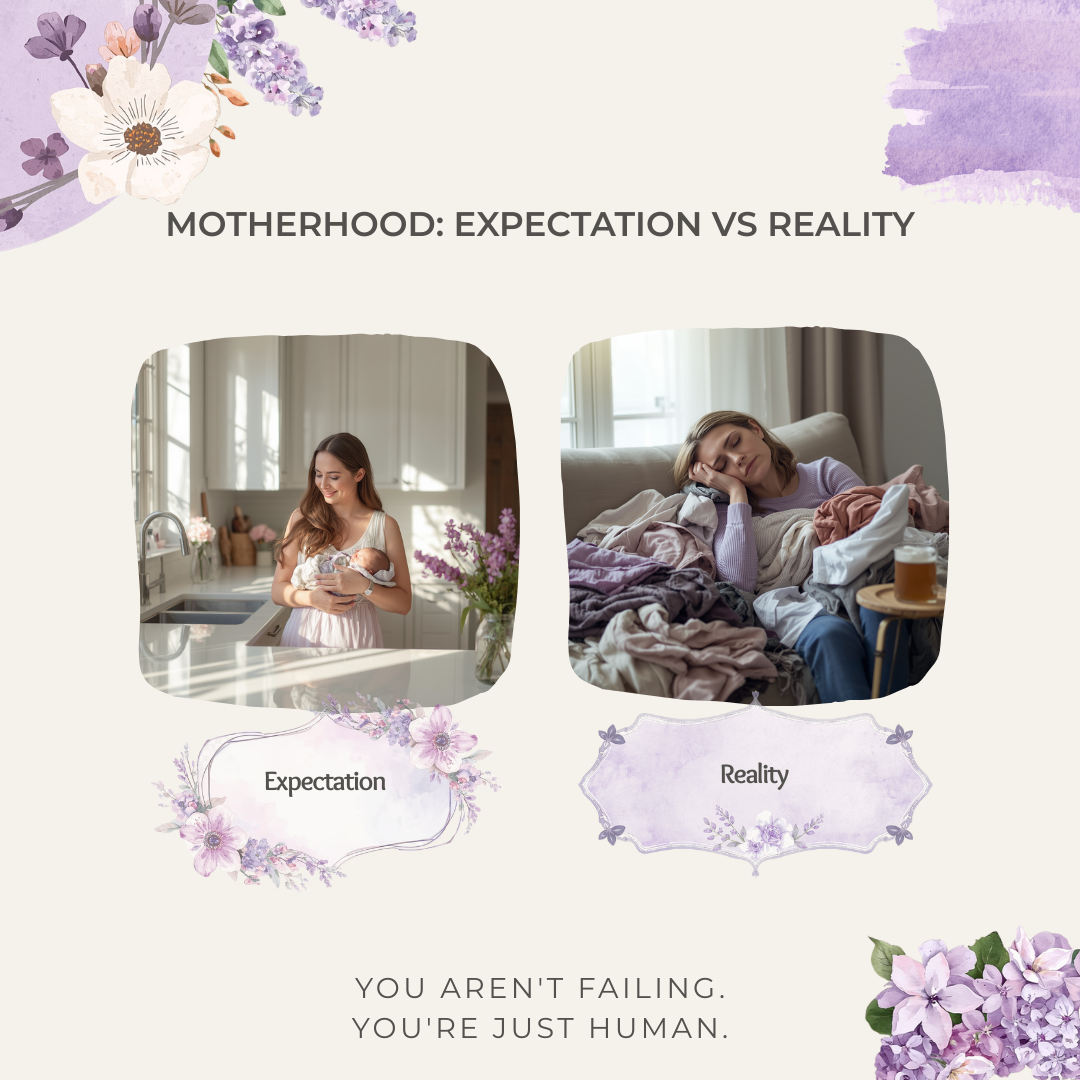
Maternal Mental Health Month tends to bring a particular kind of conversation into focus, although it is often not the one that gets said directly. What I find myself noticing, both in practice and more generally, is how quickly people begin to measure themselves against an idea of how this period is supposed to feel, and how easily that comparison turns inward when things don’t quite match up. There is often a sense that other people are managing, or at least appearing to manage, in a way that feels out of reach, and that gap can become filled with a quiet but persistent questioning of oneself.
What sits underneath that is rarely just about the present moment. Expectations around being a “good” mother are usually shaped over a long period of time, influenced by how someone was parented, what they have witnessed in others, what they have carried forward, and what they have tried to do differently. These expectations do not always appear as clear statements, but they are there in the way people talk about themselves, in the hesitations, in the sense that certain thoughts need to be softened or held back. Experiences such as exhaustion, ambivalence, or disconnection can begin to feel difficult to acknowledge, not because they are uncommon, but because they do not sit comfortably alongside those internalised ideas of how things should be.
At the same time, there is something about the physical and hormonal aspects of early motherhood that continues to feel under-recognised in a lived sense. While there is language for it, and awareness at a general level, it does not always translate into understanding within relationships, particularly where one person is trying to make sense of an experience, they are not directly having. The impact of that gap can be significant, as it can leave mothers holding something that feels both overwhelming and, at times, difficult to fully explain or legitimise.
This is something I hold in mind not only through my work, but through my own experience of growing up with a mother who became unwell after my sister was born, following an emergency C-section and a period of puerperal psychosis. That experience marked a shift in her mental health that had ongoing effects, and it sits in the background of how I think about maternal distress, not as a defining explanation, but as a reminder of how complex and far-reaching these experiences can be.
What often makes a difference, even in a small way, is not being encouraged to meet a particular standard or to reframe things more positively, but having space where the full experience can exist without being immediately measured against what it is supposed to look like. When that happens, there is sometimes a shift away from self-surveillance and towards something that feels more accurate and more compassionate, even if the wider circumstances remain unchanged.

